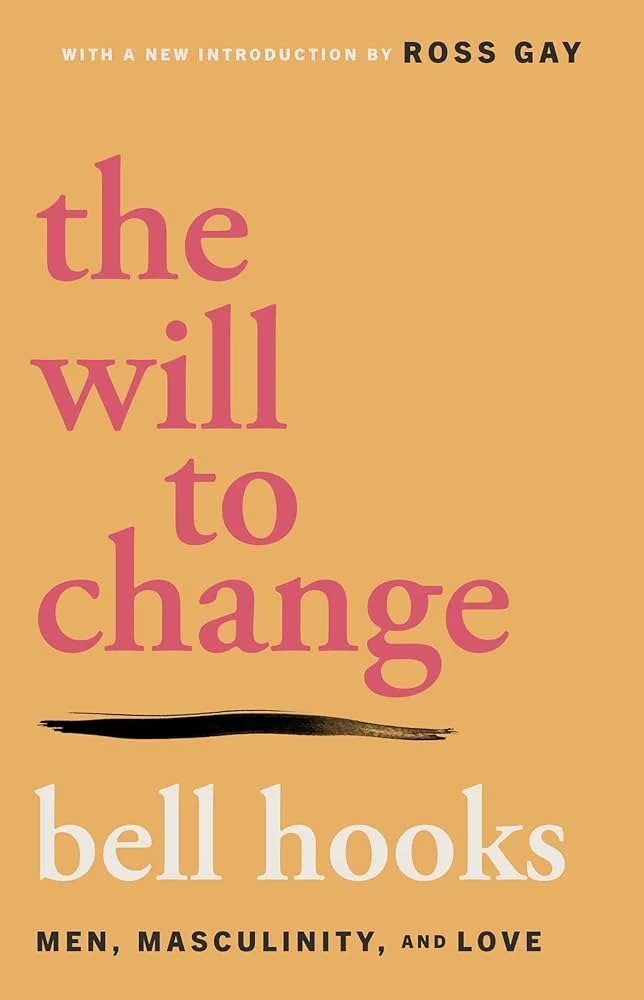
The Will To Change by bell hooks
A deeper look at masculinity, feminism, and the space in between
This is the first non-fiction book I’m featuring on my blog, which feels especially meaningful considering one of my 2026 reading goals was to read at least two non-fiction books this year. Starting with The Will to Change feels like I chose something both impactful and challenging in the best way.
One of my initial reactions while reading was that hooks could feel repetitive at times. However, as I continued, I began to understand that this repetition was intentional. She approaches masculinity and feminism from multiple angles, revisiting ideas in different contexts to fully unpack them. Rather than weakening her argument, it actually made her perspective feel more complete and deeply considered.
I wouldn’t say this book completely changed my perspective, but it definitely expanded it. It pushed me to think more critically about masculinity, feminism, and how the two intersect. hooks emphasizes that masculinity itself is not inherently toxic, but that we live within a culture where toxic masculinity is normalized. The goal, she suggests, is to move toward a kind of feminist masculinity—one that requires both men and women to actively participate in change.
One of the most impactful takeaways for me was her argument that violence is not biological, but cultural. This idea reframes so much of how we think about men and behaviour. Alongside this, she stresses the importance of allowing boys to express emotions openly and the harm caused when they are taught to suppress them. She also highlights something that isn’t always acknowledged: that patriarchal systems are upheld not only by men, but by women as well, particularly in how boys are socialized.
Reading this made me reflect more deeply on the men in my own life. It encouraged me to think about their childhoods and the environments that shaped them, rather than viewing behaviors in isolation. That shift in perspective alone felt incredibly valuable.
Another idea that stood out to me was hooks’ discussion of political violence. She expands the concept of violence beyond the physical and emotional, showing how systems and structures can cause harm on a broader scale.
While she doesn’t specifically discuss issues like trans rights, her framework led me to think about how political decisions—such as those surrounding reproductive or trans rights—can function as a form of violence that impacts both men and women. This was one of those moments where her work didn’t just present ideas, but actively shaped the way I began to apply them to the current world.
I also really appreciated her discussion on feminists raising sons. Even though I’m currently childfree, this has always felt like a huge question mark for me. How do you raise a boy to exist within a patriarchal society while actively resisting it? hooks’ insights made that question feel less overwhelming and left me feeling more confident and reassured about what that could look like.
Overall, The Will to Change is a thoughtful, challenging, and ultimately hopeful read. It’s one of those books that doesn’t necessarily give you all the answers, but instead equips you with better questions—and a broader lens through which to view the world. I would genuinely recommend it to everyone, regardless of gender.
As a side note, I was particularly interested in her critique of J. K. Rowling and the Harry Potter series. Hooks raises questions about how the series engages with themes of power, violence, and race. Looking back, it’s interesting to see how conversations around Rowling have evolved in feminist spaces in recent years.
RATING: 5/5