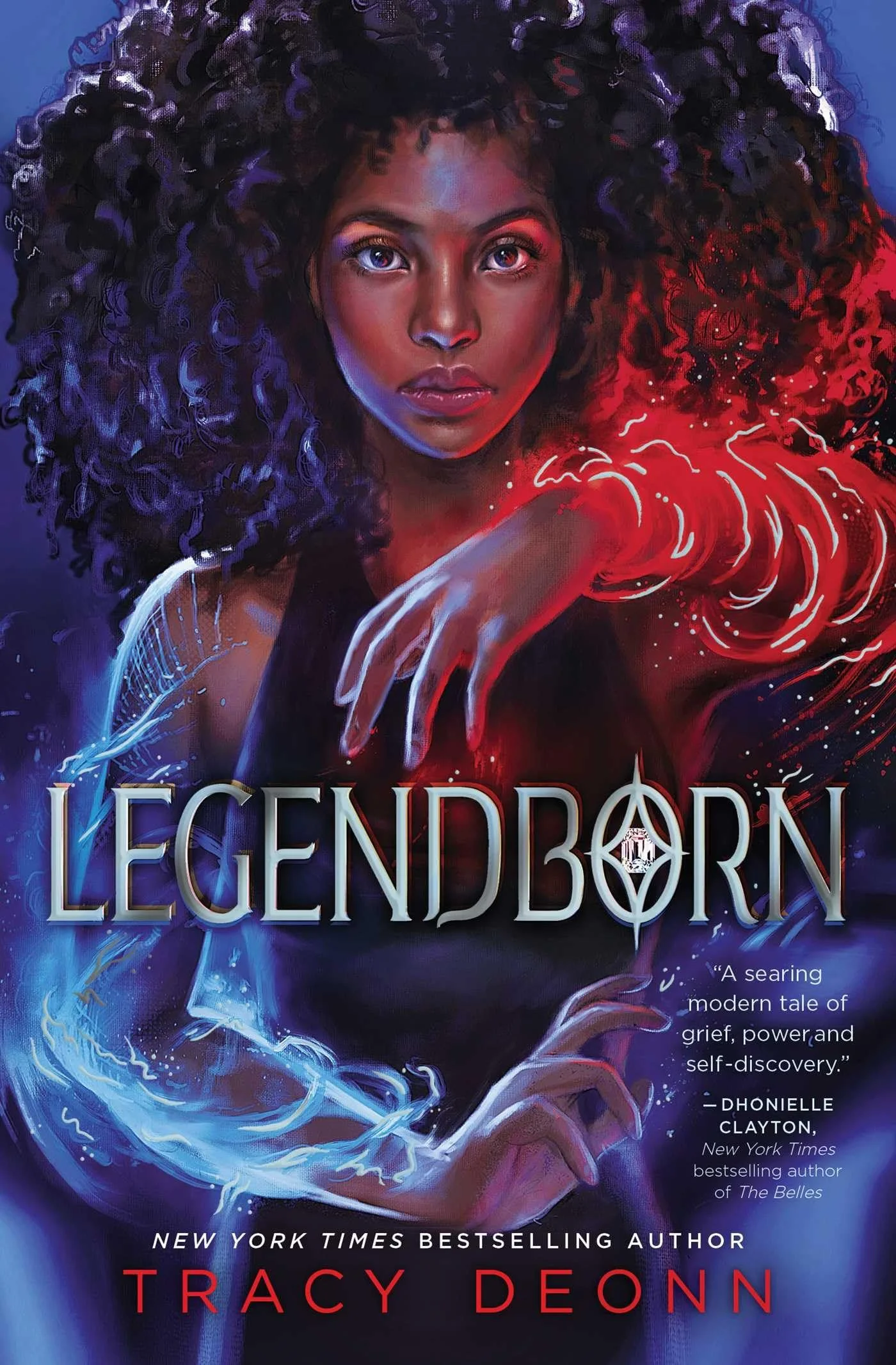
Legendborn by Tracy Deonn
A bold reimagining of Arthurian legend that refuses to shrink its heroine—or its truths
For those who follow me, it’s not often that I read and review YA novels. However, given the popularity of this series and the amount of online discourse surrounding it, I decided to check it out.
Legendborn is an Arthurian-inspired fantasy novel with Briana (“Bree”) Mathews as our lead. I was especially excited going in, as the last Arthurian retelling I truly loved was Avalon High by Meg Cabot, which I read in high school and absolutely adored (we will not be discussing the film adaptation—it was abysmal). With that in mind, I had high expectations—and I’m happy to say this novel did not disappoint.
After the death of her mother and a transition to a new school, Bree is left grappling with grief, unanswered questions, and the challenge of navigating an unfamiliar environment on her own. From the outset, the novel also addresses her experiences as a Black girl in North Carolina, including the racism she encounters. This element has sparked a significant amount of online discourse. I’ve seen people on platforms like TikTok and Instagram claim the book is “unrelatable” and use that as a reason to stop reading.
To me, that response is deeply frustrating. Even if someone cannot directly relate to Bree’s experiences with race, there are countless other ways to connect with her character. When she says, “I wish I could shrink into someone more convenient,” that sentiment resonated with me immediately—it’s a feeling I’ve experienced more than once. Characters—and people—are complex and multidimensional; reducing them to a single aspect of identity and dismissing their stories on that basis feels both limiting and disheartening. To claim there isn’t a single relatable moment or character in this book is, frankly, baffling.
Deonn’s magic system is another standout. It feels both original and carefully constructed, and I especially appreciated the inclusion and validation of multiple forms of magic. This approach makes the story feel more grounded, despite its fantastical elements. In reality, we live among diverse political systems, cultural norms, and ways of understanding the world—yet fantasy often defaults to a single dominant magical framework. Deonn challenges this by engaging with themes of colonialism and examining how dominant systems can suppress or invalidate other legitimate forms of knowledge and power. Given the historical context of North America, this layer adds meaningful depth to the story.
Overall, this novel is exceptional. If someone tells you otherwise, I encourage you to look beyond vague claims of “relatability.” If that’s the extent of their critique, it may be worth questioning what they value in storytelling. I highly recommend this book to anyone looking for a richly layered, thought-provoking fantasy.
RATING: 5/5